China Best Rugged Devices What Certifications Are Required?

Time:2026-10-05 Author:Ethan
0%

When buyers ask, “what certifications are required for rugged devices,” they often expect one universal answer. There is not one.

A rugged tablet used in a Chinese warehouse faces different requirements from a vehicle computer exported to Europe or North America. China Compulsory Certification may apply to specific product categories. SRRC approval can matter when wireless functions are included. Battery-powered equipment may also require transport testing, such as UN 38.3. These requirements depend on the product, radio modules, battery design, workplace, and destination market.

“Ruggedness is proven by evidence, not by appearance,” says Dr. Michael Chen, an independent conformity-assessment specialist who advises industrial electronics manufacturers. His point is easy to overlook. A thick rubber shell does not automatically prove compliance.

Testing may involve IP ratings for dust and water protection, IEC 60068 environmental tests, or MIL-STD-810H methods for vibration, shock, temperature, and humidity. However, MIL-STD-810H is a testing framework, not a blanket certification. That distinction matters.

For hazardous environments, ATEX or IECEx certification may be necessary. Wireless products may need regional approvals, including CE and FCC requirements. Some claims can be misunderstood.

This guide examines China’s most relevant certifications and testing routes for rugged devices. It also considers factory documentation, model variations, component changes, and supplier responsibility. A certificate for one configuration may not cover every configuration.

Manufacturers sometimes treat certification as paperwork completed near shipment. That approach can create expensive delays. Stronger practice begins during product design, with traceable test records and clearly defined markets.

The details are technical. They are also practical.
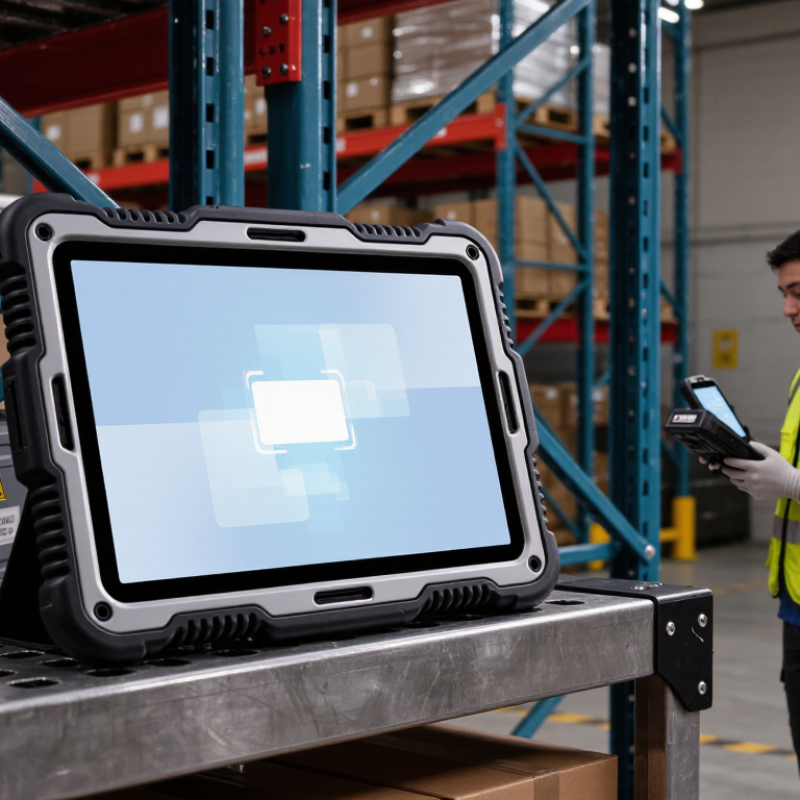
China Best Rugged Devices What Certifications Are Required?

What Defines a Best Rugged Device in China?

A best rugged device in China is not defined by a thick shell alone. It must remain usable in factories, warehouses, construction sites, and outdoor service work. Dust, rain, gloves, sunlight, and repeated drops expose weak design quickly. A reliable device needs verified IP protection, impact testing, stable battery performance, and readable controls. Certification matters, but practical durability matters more.

For the Chinese market, buyers should check applicable CCC requirements and request current test reports. Export projects may also require CE, FCC, or other destination-specific approvals. These marks should match the exact model, radio configuration, and battery package. A supplier should provide traceable documents, laboratory details, and test dates. Generic certificates create doubt.

From field evaluations, small details often decide performance. A sealed charging port reduces contamination. A replaceable battery supports long shifts. A responsive screen still matters under wet fingers. Strong after-sales repair channels protect the investment. However, no rugged device survives careless handling forever. I have seen devices pass drop tests yet fail after poor charging habits. That weakness deserves honest discussion. Buyers should test sample units in real conditions before placing large orders. A best device is durable, serviceable, compliant, and suitable for its actual workload.

Which Safety Certifications Are Required for Rugged Devices?

Rugged devices need more than a strong shell. Their safety certification depends on the worksite, power source, and exposure risk. The International Labour Organization estimated 2.93 million work-related deaths and 395 million non-fatal injuries each year. Its 2023 report shows why equipment reliability cannot be treated as a marketing detail. The label matters. An IP rating under IEC 60529 proves resistance to dust or water ingress, but it does not prove electrical safety or explosion protection.

For hazardous areas, buyers should check ATEX certification in Europe or IECEx certification for international projects. These approvals define gas, dust, temperature, and equipment-group limits. A device used near fuel vapors may require protection for a specific zone, not simply an IP68 enclosure. For general electrical equipment, IEC 62368-1 is widely used for information and communication technology products. Medical deployments usually require IEC 60601-1. Battery-powered units may also need IEC 62133-2 testing and UN 38.3 transport testing.

Regional approval still matters. European sales may require conformity with applicable CE legislation, while North American projects often request certification through an accredited testing laboratory. The European Commission’s 2023 Safety Gate report recorded 3,412 product alerts, showing how frequently unsafe products reach market surveillance systems. Not always. Certification does not guarantee perfect field performance. Poor charging practices, damaged seals, or untested accessories can defeat a compliant design. I would verify the certificate scope, test conditions, firmware version, and maintenance records before purchase.

China Best Rugged Devices: What Certifications Are Required?

Certification requirements depend on the destination market, radio functions, power source, operating environment, and intended use. The table distinguishes legal market-access requirements from voluntary or project-specific evidence.
Certification or Standard Main Market or Region Purpose When It Applies to Rugged Devices Typical Requirement Status Common Evidence or Test Records
CCC China China Compulsory Certification for products covered by the applicable Chinese product catalogue. Required when the device category is included in the current compulsory certification scope, such as certain information-technology or electrical products. Conditional Application documents, product testing, factory inspection where applicable, and a valid certification certificate.
CE Marking European Union and European Economic Area markets Demonstrates conformity with applicable European Union legislation, such as electrical safety, electromagnetic compatibility, radio equipment, environmental, and hazardous-substance requirements. Required before placing covered products on the European market. The applicable directives or regulations depend on the device design and functions. Market Access Technical file, risk assessment, test reports, declaration of conformity, user information, and product marking.
FCC Authorization United States Controls radio-frequency emissions and unintentional electromagnetic emissions from electronic equipment. Required for devices marketed in the United States that contain radio transmitters or fall under applicable unintentional-radiator rules. Conditional Supplier’s Declaration of Conformity or certification, laboratory test reports, identification records, and required labeling.
ISED Certification Canada Addresses radio equipment and electromagnetic compatibility requirements in Canada. Required for rugged tablets, handheld terminals, scanners, and other products containing wireless transmitters intended for the Canadian market. Conditional Radio test reports, technical specifications, certification records, and approved hardware or antenna information where applicable.
UKCA Marking Great Britain Indicates conformity with applicable product regulations in Great Britain. Applies to covered products placed on the Great Britain market, subject to the current United Kingdom implementation rules and transitional arrangements. Market Access Technical documentation, declaration of conformity, applicable test reports, and product labeling.
IEC 62368-1 International; adopted in many national schemes Product safety standard for audio, video, information, and communication technology equipment based on hazard-based safety engineering. Commonly used for rugged computers, terminals, docks, chargers, and power supplies that fall within its scope. Required by Market Electrical safety test report covering electric shock, fire, energy sources, mechanical hazards, and abnormal operation.
IEC 61010-1 International; laboratory, measurement, and control equipment markets Provides safety requirements for measurement, control, and laboratory electrical equipment. Relevant when the rugged device is designed as industrial measurement, control, or laboratory equipment rather than general-purpose information technology equipment. Application-Specific Safety evaluation, insulation and creepage measurements, temperature tests, protective-circuit verification, and abnormal-condition testing.
IEC 60529 IP Rating International Classifies protection against access to hazardous parts and ingress of solid foreign objects and water. Relevant when a product is advertised as dust-resistant, water-resistant, or protected against temporary or continuous immersion. Claim-Dependent Ingress-protection test report identifying the tested enclosure configuration, accessories, test conditions, and achieved IP code.
IEC 60068 Environmental Testing International Provides methods for testing environmental stresses such as temperature, humidity, vibration, shock, and altitude. Useful for validating performance in outdoor, transportation, industrial, warehouse, and field-service environments. Usually Voluntary Test plan and reports for temperature cycling, damp heat, vibration, mechanical shock, drop, corrosion, or altitude as applicable.
MIL-STD-810 Often requested for defense and demanding industrial procurements Describes environmental engineering and laboratory test methods for equipment intended to withstand defined service environments. Relevant when a customer specification or procurement contract requires military environmental testing. It is not a universal government certification. Contract-Dependent Configuration-specific test plan, tailoring rationale, laboratory reports, and clearly identified methods and procedures.
ATEX European Union hazardous areas Addresses equipment and protective systems intended for use in potentially explosive atmospheres. Required when the rugged device is designed for a classified explosive atmosphere, such as certain gas, vapor, mist, or combustible-dust environments. Application-Specific EU declaration of conformity, equipment category or protection level, notified-body assessment where required, technical file, and special marking.
IECEx International hazardous-area markets International conformity assessment system for equipment used in explosive atmospheres. Relevant for global projects requiring recognized hazardous-location certification beyond a single regional regulatory scheme. Project-Dependent IECEx certificate of conformity, product schedule, applicable explosive-atmosphere test reports, and controlled manufacturing records.
RoHS European Union and other jurisdictions with similar rules Restricts specified hazardous substances in electrical and electronic equipment. Applies to covered electrical and electronic products placed on markets that have adopted RoHS-type substance restrictions. Market Access Supplier declarations, material declarations, laboratory analysis when needed, and technical documentation.
REACH European Union Controls chemicals and creates communication obligations for substances of very high concern in articles and supply chains. Relevant when materials, components, batteries, coatings, plastics, or other articles trigger applicable chemical communication obligations. Supply-Chain Dependent Material declarations, supplier information, substance assessments, and customer communication records where required.
Battery Transport Testing: UN 38.3 International transport of lithium cells and batteries Demonstrates that applicable lithium cells or batteries have passed transport safety tests. Required when the rugged device contains or is shipped with lithium cells or batteries covered by dangerous-goods transport rules. Transport Requirement UN 38.3 test summary, battery specifications, packaging records, and transport classification documents.
WEEE and Local E-Waste Obligations European Union and other jurisdictions with producer-responsibility schemes Addresses registration, collection, recycling, and disposal obligations for electrical and electronic equipment. Applies according to the product category and the country where the product is placed on the market; obligations may fall on manufacturers, importers, or distributors. Jurisdiction-Dependent Producer registration, disposal marking, recycling information, reporting records, and take-back arrangements where applicable.

When Are Radio and Wireless Approvals Necessary?

When Are Radio and Wireless Approvals Necessary?

A rugged device needs radio approval when it intentionally transmits signals. This includes Wi-Fi, Bluetooth, cellular, NFC, and some satellite functions. Receive-only positioning may follow different rules. Confirm the product’s exact radio behavior before selecting certificates. A device used in China may require local radio and electromagnetic compatibility approvals. Export markets can require separate approvals, such as FCC authorization in the United States or RED compliance in the European Union.

The approval process normally reviews frequency bands, transmission power, antenna design, and software controls. Changing an antenna can invalidate earlier test results. So can increasing power through firmware. Wireless modules may have existing approvals, but the finished device still needs evaluation. Housing materials, battery systems, and nearby circuits can affect emissions. Test the complete rugged unit, not only its internal module.

Environmental claims also matter. IP protection, drop resistance, electrical safety, and battery transport testing support a reliable product file. They do not replace radio approval. A common mistake is treating a pre-certified module as a complete compliance solution. That assumption can fail during market entry. Requirements also change, and country databases are not always simple to interpret. Keep test reports, declarations, labeling details, and firmware versions together. The checklist may still need revision after field testing.

What Industry-Specific Certifications May Apply?

For rugged devices, industry-specific certifications often matter more than a rugged appearance. A sealed enclosure may look suitable for a factory, yet it may not be approved for explosive atmospheres. Hazardous-area operations can require ATEX or IECEx certification, while North American sites may follow ANSI/ISA standards. These approvals depend on gas or dust classification, temperature limits, and installation conditions.

Healthcare environments may require IEC 60601-1 compliance, especially when equipment operates near patients or medical systems. Railway applications commonly examine EN 50155, which covers vibration, temperature, power variation, and electromagnetic conditions. Maritime equipment may need IEC 60945 testing for salt exposure, humidity, vibration, and navigation-related interference. Automotive projects often reference ISO 16750 for electrical and environmental stresses.

Do not treat every test report as a certification. They are different documents. A supplier should provide the certificate number, testing laboratory, covered model, revision, and valid operating conditions. In procurement reviews, a common mistake is matching a device to an industry name without checking the exact deployment zone. That shortcut can create expensive delays. Certification scope deserves careful reading. A device approved for a controlled warehouse may not qualify for a chemical processing area, even when both environments seem “industrial.” Requirements also change by country, project owner, and network connection. Verify them with the local authority and the responsible safety engineer.

How to Verify Certification Compliance Before Purchase

When choosing rugged devices for China or international deployment, verify compliance before comparing prices. A product page is not proof. Request the exact model number, hardware revision, and intended sales region. The same device may use different radios, batteries, or chargers.

Check the Declaration of Conformity and test reports for CE, FCC, or UKCA requirements, depending on the destination market. Confirm that the issuing laboratory is accredited and that its scope covers radio, electrical safety, and electromagnetic compatibility. For industrial environments, review the IP rating under IEC 60529 and any claimed MIL-STD-810 test methods. Do not treat “military grade” as a certification. It may only describe selected laboratory tests.

Look for certificate numbers, issue dates, test conditions, and matching model names. Verify them through the regulator, certification body, or laboratory database when available. A QR code helps, but it is not enough. Ask whether accessories and replacement batteries are included in the tested configuration. For battery-powered equipment, request transport and safety documentation, including applicable UN 38.3 evidence. In hazardous locations, check whether ATEX or IECEx approval is genuinely required. A polished PDF can still hide an outdated revision. I have found that small suffixes in model numbers cause the most confusion. Build a written compliance checklist and have the supplier sign every applicable item before purchase.

FAQS

What makes a rugged device suitable for demanding work?

It needs more than a thick outer shell. Dust, rain, gloves, sunlight, and repeated drops test real durability. Look for verified IP protection, impact testing, stable battery performance, and readable controls. The device must fit its actual workload.

Which features matter in factories and warehouses?

A sealed charging port helps block dust and moisture. A responsive screen should work with wet fingers and gloves. Clear controls reduce mistakes near shelves or machinery. Replaceable batteries can support long shifts.

Which documents should buyers request before purchasing?

Request the exact model number, hardware revision, test reports, and certification documents. Check certificate numbers, issue dates, laboratory details, and covered configurations. The battery, charger, and radio should match the tested package. Generic certificates create uncertainty.

What certifications may apply to rugged devices?

Requirements depend on the working environment and destination country. Hazardous areas may require specialized safety approvals. Healthcare equipment may need medical electrical compliance. Railway, maritime, and automotive projects can require separate environmental standards.

Is an IP rating enough for industrial use?

No. An IP rating mainly addresses dust and water entry. It does not prove resistance to vibration, temperature changes, drops, or electrical interference. Review additional test methods and actual operating conditions. One rating never tells the whole story.

How can buyers verify certification compliance?

Compare the certificate with the exact model and hardware revision. Confirm the laboratory’s accreditation and testing scope. Verify documents through regulators, certification bodies, or laboratory databases when possible. A QR code helps, but it is not proof.

Why should buyers test sample devices before a large order?

Laboratory tests cannot recreate every workplace. Test samples with gloves, wet fingers, sunlight, dust, and repeated charging. Check battery life during a full shift. I have seen devices pass drop tests but fail after poor charging habits.

What battery and accessory details deserve attention?

Ask whether replacement batteries and chargers were included in compliance testing. Review battery transport and safety documents when applicable. Confirm charging behavior across the intended temperature range. A strong device can still fail through weak accessories.

Can a certified device work everywhere?

No. Certification usually covers specific models, configurations, conditions, and locations. A device approved for a controlled warehouse may not suit a chemical processing area. Verify requirements with the local authority and safety engineer. This step feels slow, but skipping it can cost more.

Conclusion

Choosing the best rugged device in China involves more than checking its resistance to dust, water, drops, vibration, and extreme temperatures. Buyers should assess build quality, operating stability, battery safety, repairability, and suitability for the intended working environment. Understanding what certifications are required for rugged devices is also essential, because compliance depends on the product type, technical design, destination market, and industry application.

Common requirements may include electrical safety and electromagnetic compatibility testing, while devices with wireless functions may need radio-frequency and wireless communication approvals before sale or use in a specific region. Additional industry-specific certifications can apply to equipment used in areas such as transportation, healthcare, manufacturing, or hazardous workplaces. Before purchase, request current certificates, test reports, product model details, and certification scope. Verify that the documents match the exact device configuration and issuing authority, and confirm whether approvals remain valid for the target market and intended application.

Ethan

Ethan

Ethan is a seasoned marketing professional with a deep expertise in our company's innovative product line. With a passion for sharing knowledge and insights, he takes the lead in regularly updating our corporate blog, where he explores industry trends, product features, and effective marketing......