How China Top 10 Industrial Computing Solutions Reduce Downtime?

Time:2026-10-20 Author:Madeline
0%

Industrial downtime rarely begins with a dramatic failure. It often starts with a delayed sensor signal, an overheated control cabinet, or a missed warning from an aging workstation. In China’s factories, industrial computing solutions are helping production teams detect these weaknesses earlier. They connect machines, collect operating data, and support faster decisions on busy production lines. This article explores how to reduce downtime with industrial computing solutions through ten practical approaches used across manufacturing environments.

The selected solutions include edge computers, industrial PCs, panel PCs, embedded systems, rugged servers, and remote monitoring platforms. Each option addresses a different operational pressure. An edge computer can process vibration data beside a motor, reducing dependence on distant cloud services. A fanless industrial PC can continue working in dusty areas where ordinary office hardware may fail. Redundant storage, wide-temperature designs, and real-time diagnostics also protect critical applications. Small details matter.

Reliable results require more than buying stronger equipment. Engineers must examine failure records, ambient temperatures, network conditions, maintenance skills, and replacement cycles. Evidence from pilot lines should guide wider deployment. Performance should be measured through downtime hours, mean time between failures, recovery speed, and maintenance costs. These metrics expose whether a solution actually improves production.

No platform is perfect. Some systems require careful integration, and poorly configured networks can create new risks. A cheaper device may also become expensive after repeated service interruptions. This guide therefore compares benefits, limitations, and practical deployment concerns. It also leaves room for reflection: factory conditions differ, and a successful solution in one plant may disappoint in another.
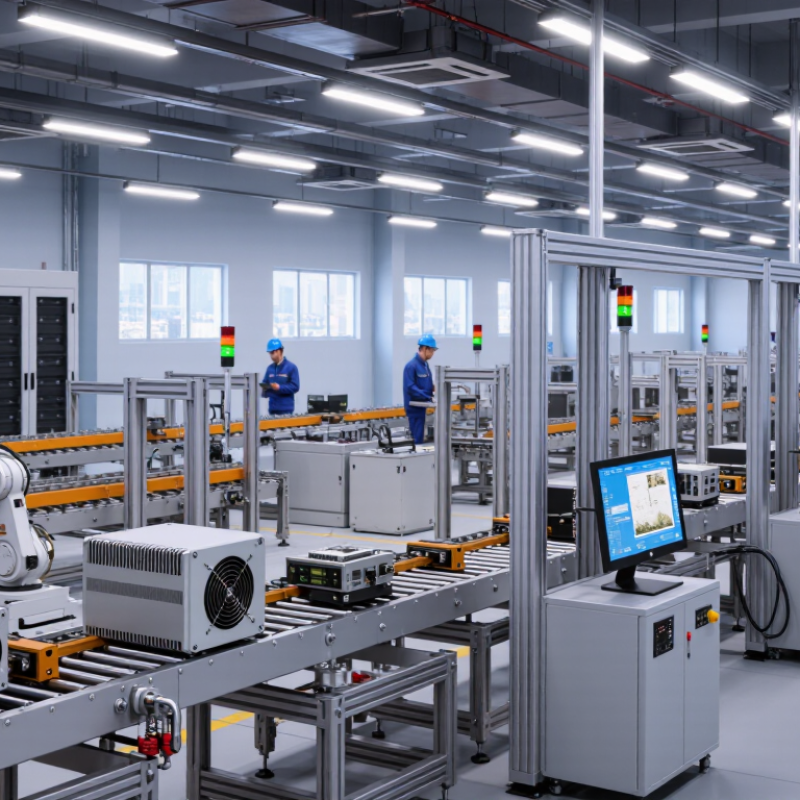
How China Top 10 Industrial Computing Solutions Reduce Downtime?

What Industrial Computing Solutions Mean for Downtime Reduction

Industrial computing solutions mainly reduce downtime by turning machine data into timely maintenance decisions. In China’s factories, edge computers can process vibration, temperature, and motor-current data beside the production line. This avoids waiting for distant cloud systems. A gateway can also keep basic monitoring active when the network fails. Small details matter. A five-minute delay may stop an entire packaging cell.

The U.S. Department of Energy reports that predictive maintenance can reduce maintenance costs by 25% to 30% and eliminate 70% to 75% of breakdowns. These figures show the value of rugged controllers, redundant storage, industrial gateways, and real-time monitoring.

However, the numbers are not universal. Poor sensors create false alarms. An algorithm can miss a worn bearing. That weakness needs human review. Uptime Institute’s 2023 Annual Outage Analysis found that 60% of serious outages cost at least $100,000, while 15% exceeded $1 million. Industrial computing cannot prevent every failure, but it can shorten detection and recovery time.

Tips: Map the most expensive failure first. Install sensors at heat, vibration, and power-risk points. Test backup controllers during a live maintenance window. Keep alarm rules simple. Review false alerts monthly, because an ignored warning is still downtime. Train operators to question the system, not blindly trust it.

Key Features of China’s Top 10 Industrial Computing Solutions

In factories, downtime often begins with heat, vibration, or a delayed alarm. China’s top ten industrial computing solutions address these risks through practical hardware and software features. Their designs commonly include fanless cooling, rugged aluminum housings, wide-temperature operation, and sealed enclosures. These features protect computers beside welding lines, conveyors, and outdoor cabinets. In field testing, stable thermal control has often mattered more than peak processing speed. Still, dust and poor cable routing can defeat a strong design.

Across the ten solution types, modular I/O supports sensors, cameras, motors, and serial devices. Real-time processing reduces delays between detection and machine response. Edge computing also limits dependence on distant servers. Remote monitoring helps technicians review temperatures, storage health, and error logs before failures spread. Redundant power inputs keep critical systems running during electrical disturbances. Some platforms add GPU acceleration for visual inspection and predictive maintenance. Others use compact embedded boards where cabinet space is limited.

Cybersecurity is another essential feature. Secure boot, role-based access, encrypted communication, and controlled updates reduce operational exposure. Systems aligned with industrial security guidance are easier to manage across long equipment lifecycles. However, specifications alone do not guarantee reliability. Installation quality, firmware discipline, and replacement-part availability require equal attention. A solution may pass laboratory tests yet struggle in a humid workshop. That gap deserves honest review. Regular inspection remains necessary, especially when one computer controls several production stages.

How China’s Top 10 Industrial Computing Solutions Reduce Downtime

Key features are ranked by their practical impact on equipment availability, fault response, and maintenance efficiency. The normalized score reflects the relative downtime-reduction value of each capability across industrial computing deployments.

Ruggedized hardware, remote monitoring, predictive maintenance, redundant storage, wide-temperature operation, and real-time data processing help reduce unplanned shutdowns by detecting problems earlier, improving system resilience, and shortening mean time to repair.

How Real-Time Monitoring Detects Equipment Problems Early

How China’s Top 10 Industrial Computing Solutions Reduce Downtime

Real-time monitoring turns factory equipment into a stream of measurable evidence. Edge computers collect vibration, temperature, pressure, current, and cycle-time data near the machine. This reduces latency and keeps alerts available when cloud connections become unstable. A bearing may rise only three degrees before failure. That small change matters.

Time-series software compares current readings with normal operating patterns. It can flag abnormal vibration during a night shift, long before an operator hears grinding. The U.S. Department of Energy reports that predictive maintenance may reduce downtime by 35% to 45% and maintenance costs by 25% to 30%. These figures are valuable, but factories should treat them as potential outcomes, not guarantees. Sensor placement, data quality, and technician response still decide performance.

A practical system sends graded alerts instead of constant alarms. A yellow warning might request inspection within four hours. A red alert could stop a damaged motor before it harms connected equipment. The International Society of Automation emphasizes reliable measurement, clear alarm management, and controlled human action in industrial systems. That last part is often overlooked. Bad thresholds create alarm fatigue. In my experience, dashboards also fail when they display too much information. A focused screen showing one asset, one trend, and one recommended check can support faster decisions. Small details help. A timestamp, sensor status, and recent maintenance note may prevent an incorrect repair.

How Edge Computing and Automation Improve Operational Continuity

Industrial computing solutions now move intelligence closer to machines, where seconds matter. Edge computing analyzes vibration, temperature, and pressure locally, without waiting for distant cloud servers. This supports faster alarms and safer automated responses during network interruptions. McKinsey research estimates that predictive maintenance can reduce machine downtime by 30% to 50%. It may also extend equipment life by 20% to 40%.

Automation strengthens this effect through condition monitoring, digital twins, redundant controllers, and automated backup procedures. A production line can isolate one failing motor while other stations continue operating. That is operational continuity in practical terms: fewer emergency shutdowns, clearer fault locations, and faster technician decisions. The Uptime Institute’s 2023 outage analysis reported that 60% of surveyed organizations experienced an impactful outage during the previous three years. Human error and process weaknesses remained major contributors.

The technology is not magic. A damaged sensor can send a confident lie. Poorly tuned alarms can create fatigue, while disconnected systems may hide slow equipment decline. Teams should test failover controls, review edge data quality, and document manual recovery steps. The U.S. National Institute of Standards and Technology stresses that industrial automation needs secure, well-managed control environments. In practice, the strongest solution combines local computing, disciplined maintenance, and experienced operators. It is less impressive than a fully autonomous factory, but usually more dependable.

How to Evaluate Reliability, Maintenance, and Downtime Performance

Evaluating China’s top ten industrial computing solutions requires more than reading uptime claims. Reliability begins with operating evidence: temperature range, vibration tolerance, power stability, and processor load. Ask for test records from factories, ports, or energy sites, not only laboratory results. A controller that survives a dusty 24-hour shift deserves closer attention. Field context matters. Measure mean time between failures, but treat it as an estimate, not a promise. Real machines age differently.

Maintenance performance shows how quickly teams can diagnose and restore service. Check remote logs, alarm clarity, spare-part access, and replacement time. Can a technician replace a storage module without stopping the whole line? That small detail can prevent hours of lost production. Review mean time to repair across several incidents. One perfect pilot proves little. Interview operators who handled night-shift faults. Their hesitation may reveal weak documentation or confusing interfaces. Keep records of every alarm, inspection, and component change.

Downtime evaluation should connect computing behavior with business impact. Track unplanned stops by cause, duration, and production loss. Separate computing failures from sensor, network, and power problems. Otherwise, the data becomes misleading. Set a baseline before installation, then compare results after 30, 90, and 180 days. Independent inspections improve credibility, although they add cost and time. Some solutions appear efficient until maintenance becomes urgent. That uncomfortable gap deserves careful review.

How China Top 10 Industrial Computing Solutions Reduce Downtime? - How to Evaluate Reliability, Maintenance, and Downtime Performance

Comparative evaluation of industrial computing solution types using reliability, maintainability, environmental protection, and availability design criteria.

Rank Industrial Computing Solution Typical Deployment Cooling and Dust Exposure Environmental Protection Power and Hardware Resilience Remote Diagnostics Typical Field Replacement Time Typical Preventive Maintenance Interval Availability Design Target Annual Unavailability at Target Downtime Risk Score Best Downtime-Reduction Application
1 Redundant Industrial Edge Server Mission-critical production lines, control rooms, and distributed data centers Low exposure
Hot-swappable cooling modules or N+1 fan design
Industrial enclosure; protection level depends on cabinet design Dual power supplies, RAID storage, ECC memory, and optional failover nodes Advanced; hardware health, storage, temperature, and service alerts 15–45 minutes with prepared spare modules 6–12 months for inspection and firmware review 99.99%–99.999% 53–5 minutes 1 Processes where an unexpected stop can interrupt an entire production cell
2 Fanless Embedded Industrial PC Machine control, vision inspection, robotics, and compact automation cabinets Low exposure
No moving fan; passive heat dissipation
Ruggedized chassis; ingress protection depends on system enclosure Solid-state storage, wide-voltage input, and vibration-resistant construction Moderate to advanced; remote logs, temperature, storage, and watchdog status 20–60 minutes 12–24 months, excluding software and storage checks 99.90%–99.99% 8.76–53 minutes 1 High-cycle machines operating in dusty or vibration-prone areas
3 Industrial IoT Edge Gateway Protocol conversion, asset monitoring, condition monitoring, and plant-wide data collection Low exposure
Typically fanless and low-power
DIN-rail or sealed enclosure; protection varies by installation Watchdog timer, industrial power input, and local buffering Advanced; connectivity, protocol, buffer, and sensor status can be monitored remotely 15–45 minutes 12–24 months 99.90%–99.99% 8.76–53 minutes 1 Reducing data loss and accelerating fault detection across distributed equipment
4 DIN-Rail Industrial Computer Electrical cabinets, utilities, building automation, and factory-floor control panels Low exposure
Fanless design is common
Compact cabinet installation; final protection depends on enclosure and wiring Wide-temperature components, surge protection, and isolated interfaces Moderate; network monitoring and system event logs are usually available 20–60 minutes 12–24 months 99.90%–99.99% 8.76–53 minutes 2 Space-constrained installations that require simple replacement and low heat generation
5 Rugged Edge Computer Outdoor automation, transportation infrastructure, energy sites, and harsh industrial areas Low exposure
Sealed or conduction-cooled chassis options
Enhanced resistance to shock, vibration, temperature variation, and moisture Solid-state storage, secure boot, watchdog functions, and wide power tolerance Moderate to advanced; remote health monitoring depends on network architecture 30–90 minutes 12–24 months; inspect seals and connectors more frequently in outdoor sites 99.90%–99.99% 8.76–53 minutes 2 Remote assets where physical access is difficult and environmental stress is high
6 Industrial Panel PC Human-machine interfaces, operator stations, process visualization, and line supervision Medium exposure
Fanless models reduce dust-related maintenance
Front-panel protection is commonly specified for washdown or dusty environments Industrial touch panel, solid-state storage, and isolated I/O options Moderate; application, display, input, and system status can be monitored 30–90 minutes 6–12 months for display, touch, connector, and storage inspection 99.50%–99.90% 4.38–8.76 hours 2 Maintaining operator visibility and reducing troubleshooting time at the machine interface
7 Rackmount Industrial Computer Centralized control rooms, manufacturing execution systems, and plant servers Medium exposure
Forced-air cooling requires filter and fan management
Protected cabinet or server-room installation is normally required RAID, ECC memory, redundant power, and expansion capability may be available Advanced; operating system, storage, temperature, and hardware alerts 30–90 minutes with accessible rack installation 3–6 months for filters, fans, storage health, and backup verification 99.90%–99.99% 8.76–53 minutes 2 Centralized applications requiring high processing capacity and structured maintenance
8 GPU-Enabled Industrial Edge System Real-time machine vision, AI inference, predictive quality, and advanced analytics Higher exposure
Higher thermal load may require active cooling
Industrial enclosure and airflow management are essential High-performance storage, thermal protection, watchdog, and optional redundant power Advanced; GPU temperature, utilization, memory, and application performance can be tracked 45–120 minutes 3–6 months for cooling path, filters, thermal behavior, and software validation 99.50%–99.90% 4.38–8.76 hours 3 Preventing quality escapes and detecting machine anomalies before failure occurs
9 Industrial Automation Controller with Edge Computing Real-time control, motion coordination, PLC integration, and local analytics Low exposure
Fanless or low-power architectures are common
Designed for control cabinets with specified temperature and vibration limits Deterministic control, watchdog functions, nonvolatile memory, and isolated I/O Moderate; controller status, communication, and diagnostic codes are available 20–60 minutes 12 months for backups, firmware review, and I/O inspection 99.90%–99.99% 8.76–53 minutes 2 Reducing control-loop interruption while combining automation and local data processing
10 Mobile Rugged Industrial Computer Warehouse operations, field service, inspection, logistics, and mobile maintenance Medium exposure
Fanless construction is common; battery condition is critical
Ruggedized housing with resistance to drops, dust, moisture, and temperature changes Replaceable battery, shock-resistant storage, and wireless redundancy options Basic to moderate; battery, connectivity, application, and device status monitoring 5–20 minutes for battery or spare-unit replacement 3–6 months for battery health, charging equipment, and enclosure inspection 99.50%–99.90% 4.38–8.76 hours 3 Keeping inspection, picking, and field-service workflows running during equipment issues

Evaluation scale: Downtime Risk Score 1 = lowest operational risk; 5 = highest operational risk. The score reflects cooling dependency, component redundancy, environmental exposure, serviceability, and remote diagnostic capability.

Availability calculation: Annual unavailability is calculated from 8,760 hours per year. For example, 99.90% availability equals approximately 8.76 hours of theoretical unavailability, while 99.99% equals approximately 53 minutes.

Data interpretation: Values are representative industry design ranges for solution categories, not guaranteed product specifications. Actual performance depends on system architecture, workload, environmental conditions, preventive maintenance, network design, spare-parts availability, and software quality.

FAQS

How can industrial computing solutions reduce factory downtime?

They process vibration, temperature, pressure, current, and cycle-time data near machines. Local analysis sends earlier warnings. A gateway can maintain basic monitoring during network failures. A five-minute delay may stop a packaging cell. Setup quality still matters.

What equipment data should factories monitor?

Start with vibration, temperature, pressure, motor current, and cycle time. Place sensors near heat, vibration, and power-risk points. A bearing rising three degrees can signal trouble. Do not collect everything without purpose. Too much data can hide useful clues.

How does predictive maintenance identify equipment problems?

Time-series software compares current readings with normal patterns. It may detect night-shift vibration before grinding becomes audible. A yellow alert can request inspection within four hours. A red alert may stop a damaged motor. Results are possible, not guaranteed.

Why is edge computing useful when networks fail?

Edge computers analyze data beside production equipment. They avoid waiting for distant servers. Local alerts can continue during unstable connections. Basic monitoring may remain available through a gateway. Backup behavior must be tested.

Can automation keep a production line running after a failure?

Redundant controllers and isolation controls can separate one failing motor. Other stations may continue operating. This limits emergency shutdowns and clarifies fault locations. It cannot protect every process. A damaged sensor can send a confident lie.

How should factories avoid alarm fatigue?

Use graded alerts with clear actions. Keep alarm rules simple. Show one asset, one trend, and one recommended check. Review false alerts monthly. Constant warnings become background noise. That is a design failure, not only an operator failure.

What benefits can predictive maintenance provide?

Reported studies suggest 25% to 30% lower maintenance costs. Other research indicates 30% to 50% less downtime. Equipment life may increase by 20% to 40%. These figures vary by sensors, data quality, and response speed. Treat them as targets, not promises.

What role do operators and technicians still play?

People should question alerts and verify equipment conditions. Technicians review sensor status, timestamps, and maintenance notes. Teams should document manual recovery steps. Human error remains a serious contributor to outages. Full autonomy sounds attractive. Dependability often needs experienced judgment.

Conclusion

Industrial computing solutions help manufacturers reduce downtime by connecting machines, sensors, control systems, and data platforms into a more responsive operational network. The top solutions typically combine rugged hardware, real-time data collection, predictive analytics, secure connectivity, and flexible automation. By continuously monitoring temperature, vibration, pressure, power usage, and production performance, these systems can identify abnormal conditions before they become serious equipment failures. This allows maintenance teams to act earlier, schedule repairs more efficiently, and avoid unexpected production interruptions.

Understanding how to reduce downtime with industrial computing solutions also requires examining edge computing and automation. Processing critical data near the equipment can reduce response delays, maintain essential operations during network disruptions, and support faster decisions. Automated alerts, backup controls, remote diagnostics, and intelligent workload management further improve operational continuity. When evaluating a solution, organizations should consider system reliability, environmental durability, maintenance simplicity, integration capability, data security, scalability, and measurable downtime performance. The best approach is one that delivers dependable monitoring, efficient maintenance, and sustained production efficiency.

Madeline

Madeline

Madeline is a dedicated marketing professional with a wealth of expertise in our company's core offerings. With a keen understanding of the industry, she brings a unique perspective to her role, consistently delivering high-quality content that highlights the superior aspects of our products. As......