When asking what industries use rugged tablets the most in China, the answer begins with working conditions, not device popularity. Manufacturing plants, logistics hubs, utilities, field service teams, and public-safety operations commonly need mobile computers that survive dust, vibration, rain, gloves, and repeated drops. A consumer tablet may fail beside a stamping press or inside a refrigerated truck. A rugged model is built for that moment.
China’s Ministry of Industry and Information Technology reported continued growth in industrial internet adoption, while the China Federation of Logistics and Purchasing recorded social logistics worth more than RMB 350 trillion in 2023. These figures do not measure tablet shipments directly. They do reveal the scale of environments requiring real-time scanning, inspection, dispatching, and asset tracking. Fortune Business Insights also identifies manufacturing, transportation, logistics, and field services as major rugged-tablet application areas in its Rugged Tablet Market report. The evidence is useful, but not perfectly China-specific.
VDC Research analyst David Krebs has stated, “Rugged mobile devices are purpose-built for demanding work environments.” That principle helps explain China’s strongest adoption patterns. Factory supervisors use tablets beside production lines. Warehouse staff scan pallets under harsh lighting. Utility technicians record readings outdoors, sometimes in heavy rain. Healthcare and public-sector teams also benefit, though adoption varies by budget and procurement rules. The more exposed the workflow, the stronger the business case. Still, “most used” should not mean “universally preferred.” Industry data often combines tablets with handheld computers, creating an imperfect comparison. This article examines the leading sectors, their daily use cases, and the evidence behind their demand.
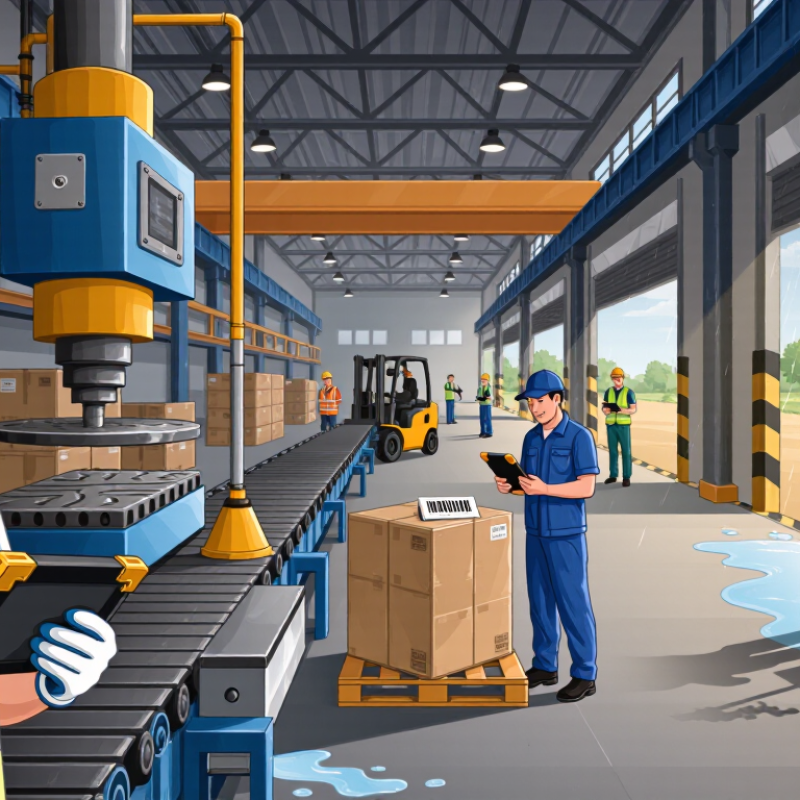
Rugged tablets are mobile computers designed for demanding work environments. They usually feature reinforced housings, sealed ports, shock resistance, and screens readable under strong sunlight. Many models also support glove operation, barcode scanning, GPS, and stable wireless connections. Unlike ordinary consumer tablets, they are built for repeated handling, vibration, dust, moisture, and temperature changes.
In China, these devices are widely used in manufacturing plants, warehouses, logistics networks, construction sites, utilities, and public transportation. A warehouse worker may scan a package beside a loading dock, while a technician records equipment data near a noisy production line. Outdoor crews often need maps, inspection forms, and photographs in one device. Reliable battery performance matters when charging access is limited. So does local network compatibility.
Rugged tablets are used because downtime can cost more than the device itself. However, they are not automatically the best choice. A reinforced case may increase weight, and advanced protection can raise purchasing and maintenance costs. Some organizations also buy powerful hardware without training staff properly. That weakens the real benefit. Careful testing is essential. Teams should check screen visibility, grip comfort, software integration, repair support, and battery life in actual Chinese work conditions. A tablet that survives a drop but slows down daily operations is still a poor investment.
Industry applications, operating conditions, and the rugged features most commonly required in China
| Industry | Typical Tablet Applications | Common Operating Conditions | Key Rugged Requirements | Typical Connectivity | Frequently Handled Data | Relative Adoption |
|---|---|---|---|---|---|---|
| Logistics and Warehousing | Inventory checks, barcode scanning, order picking, goods receiving, dispatch confirmation, and route coordination | Busy warehouses, loading docks, cold-chain areas, dust, vibration, and frequent movement between indoor and outdoor locations | Integrated barcode reader, drop resistance, glove-friendly touchscreen, long battery life, and resistance to dust and moisture | Wi-Fi, private wireless networks, 4G or 5G, Bluetooth, and satellite positioning when vehicles are involved | Stock levels, item codes, shipment status, warehouse locations, delivery records, and electronic signatures | Very High |
| Manufacturing | Production reporting, digital work instructions, quality inspections, equipment monitoring, and materials tracking | Factory floors with machine vibration, metal dust, oil splashes, temperature changes, and continuous daily use | High shock resistance, sealed enclosure, bright display, programmable keys, industrial wireless connectivity, and stable performance during long shifts | Industrial Wi-Fi, Ethernet through docking stations, Bluetooth, private 5G, and serial or industrial interfaces through accessories | Work orders, production quantities, inspection results, maintenance records, machine status, and traceability information | Very High |
| Electricity, Water, and Gas Utilities | Meter reading, asset inspection, maintenance work orders, outage reporting, geographic mapping, and field documentation | Outdoor substations, pipelines, pumping facilities, remote service areas, rain, dust, and strong sunlight | Water and dust protection, sunlight-readable display, high-capacity battery, camera, GNSS positioning, and reliable operation across a wide temperature range | 4G or 5G, private networks, Wi-Fi at facilities, Bluetooth, and GNSS | Meter readings, asset identifiers, inspection images, geographic coordinates, maintenance history, and safety checklists | High |
| Transportation and Fleet Operations | Vehicle dispatch, electronic proof of delivery, fleet inspection, driver communication, ticketing, and cargo documentation | Vehicles, depots, highways, ports, railway facilities, and outdoor environments with vibration and changing weather | Vehicle mounting support, vibration resistance, sunlight-readable screen, GNSS, rapid charging, and secure device management | 4G or 5G, Wi-Fi, Bluetooth, GNSS, and near-field communication where supported by the workflow | Routes, delivery confirmations, vehicle condition reports, cargo information, driver status, and location data | High |
| Construction and Infrastructure | Digital drawings, site inspections, progress reporting, safety checks, measurement records, and contractor coordination | Construction sites with concrete dust, mud, rain, vibration, uneven surfaces, and direct sunlight | Drop and vibration resistance, sealed ports, high-brightness display, stylus support, glove operation, and extended battery capacity | Wi-Fi, 4G or 5G, Bluetooth, GNSS, and short-range connections to measurement instruments | Construction plans, inspection photographs, safety records, progress updates, measurements, and change requests | High |
| Public Safety and Emergency Response | Incident command, patrol documentation, emergency dispatch, situational mapping, evidence recording, and resource coordination | Roadside incidents, disaster areas, severe weather, crowded public spaces, and rapidly changing field conditions | High impact protection, reliable communications, glove-friendly operation, bright display, secure data handling, and hot-swappable or extended batteries | Public mobile networks, dedicated wireless networks, Wi-Fi, Bluetooth, GNSS, and radio integration through accessories | Incident details, maps, photographs, personnel status, response times, location information, and case records | High |
| Healthcare and Medical Field Services | Patient registration, bedside documentation, mobile diagnostics, ambulance records, equipment inspection, and home-care visits | Hospitals, clinics, ambulances, laboratories, and community care locations requiring frequent cleaning and disinfection | Easy-to-clean surfaces, sealed enclosure, reliable wireless access, antimicrobial-compatible accessories where required, and secure authentication | Hospital Wi-Fi, cellular networks, Bluetooth, and near-field communication for supported identification workflows | Patient records, vital signs, medication information, service notes, equipment status, and appointment data | Medium to High |
| Agriculture and Livestock | Field mapping, crop inspection, livestock records, equipment monitoring, irrigation management, and farm inventory control | Fields, greenhouses, farms, irrigation areas, mud, dust, humidity, rain, and strong sunlight | Water and dust resistance, sunlight-readable display, GNSS, long battery life, physical controls, and compatibility with agricultural sensors | Cellular networks, Wi-Fi, Bluetooth, GNSS, and low-power sensor connections | Field locations, crop observations, livestock records, weather information, equipment status, and treatment logs | Medium |
| Mining and Heavy Industry | Equipment inspection, work permits, production monitoring, safety checks, vehicle coordination, and maintenance reporting | Dusty or muddy sites, strong vibration, low visibility, temperature variation, and remote operating areas | High impact resistance, sealed enclosure, high-brightness display, extended battery, secure communications, and optional hazardous-area suitability when required | Private wireless networks, Wi-Fi, cellular networks, Bluetooth, and GNSS | Inspection results, equipment readings, work permits, safety records, production data, and location information | Medium to High |
Note: Relative adoption levels are qualitative industry indicators based on the frequency of field mobility, exposure to harsh conditions, and the need for continuous digital data capture. Actual requirements vary by application, site conditions, and applicable safety regulations.
Logistics, manufacturing, construction, energy, transportation, and public infrastructure use them widely. Workers carry tablets through warehouses, factories, vehicles, and outdoor sites.
Workers can scan parcels, update routes, and confirm deliveries near loading bays. Bright screens remain easier to read beside open warehouse doors. Gloves can make physical buttons helpful.
Technicians record inspections, update equipment data, and move between machines. Dust, vibration, oil, and accidental drops are common workplace problems. A sealed enclosure may reduce interruptions.
Check verified resistance to drops, water, dust, and temperature changes. Do not trust protection claims without testing details. Ratings can hide important conditions.
A sunlight-readable display can reduce mistakes at construction sites. Glove and wet-touch support help during winter deliveries or maintenance. Wet fingers still cause trouble.
Battery life should cover real shifts, not only laboratory measurements. Replaceable batteries or fast charging can reduce vehicle and warehouse downtime. Long shifts expose weak batteries.
Reliable Wi-Fi, cellular service, Bluetooth, and satellite positioning support moving crews. Offline functions help in underground areas, rural routes, or disconnected sites. Sync delays remain a serious weakness.
Data encryption, user authentication, and remote management help protect work records. The tablet should also match local software systems. Security is not just hardware.
Test tablets with actual gloves, scanners, vehicles, sunlight, rain, and dropped connections. Include rushed operators and ordinary work routines. A perfect test is impossible. Still, weak testing creates expensive surprises.
Rugged tablets are built to withstand drops, dust, moisture, vibration, temperature changes, and long hours of field use, making them valuable tools in demanding Chinese work environments. The question of what industries use rugged tablets the most is closely linked to the country’s manufacturing, logistics, transportation, energy, construction, public utilities, agriculture, and emergency response sectors. Workers use these devices to access digital work orders, record inspections, track assets, communicate with teams, and update operational data directly from remote or industrial locations.
In China, rugged tablet adoption is expanding as companies modernize field operations and connect physical workplaces with digital management systems. Important features include strong protective housing, readable displays, long battery life, reliable wireless connectivity, barcode or identification support, flexible mounting options, and compatibility with enterprise software. As industrial automation, smart logistics, infrastructure development, and mobile workforce management continue to grow, rugged tablets are becoming increasingly important for improving efficiency, reducing paperwork, strengthening data accuracy, and supporting safer, more responsive operations.

 Fray Tech