Industrial computers serve a unique purpose in manufacturing and automation. Their rugged design distinguishes them from commercial computers. What is the difference between industrial and commercial computers? According to a recent report by Allied Market Research, the global industrial computer market is expected to reach $5.59 billion by 2027, reflecting a growing demand for more reliable computing solutions in harsh environments.
In industries like manufacturing, computers face extreme conditions. They endure vibrations, temperature fluctuations, and dust exposure. These environments require specialized components that standard commercial computers cannot provide. For example, an industrial PC might have an extended operating temperature range of -40°C to 85°C, compared to the typical commercial range of 0°C to 50°C. This adaptability ensures consistent performance where it matters most.
However, the challenge lies in balancing cost with durability. Some companies may opt for commercial systems, prioritizing initial savings over long-term reliability. Such decisions can lead to increased downtime and maintenance costs. It raises a crucial question: Are short-term savings worth potential long-term losses? In industrial settings, every second counts, and understanding these differences is vital for operational success.
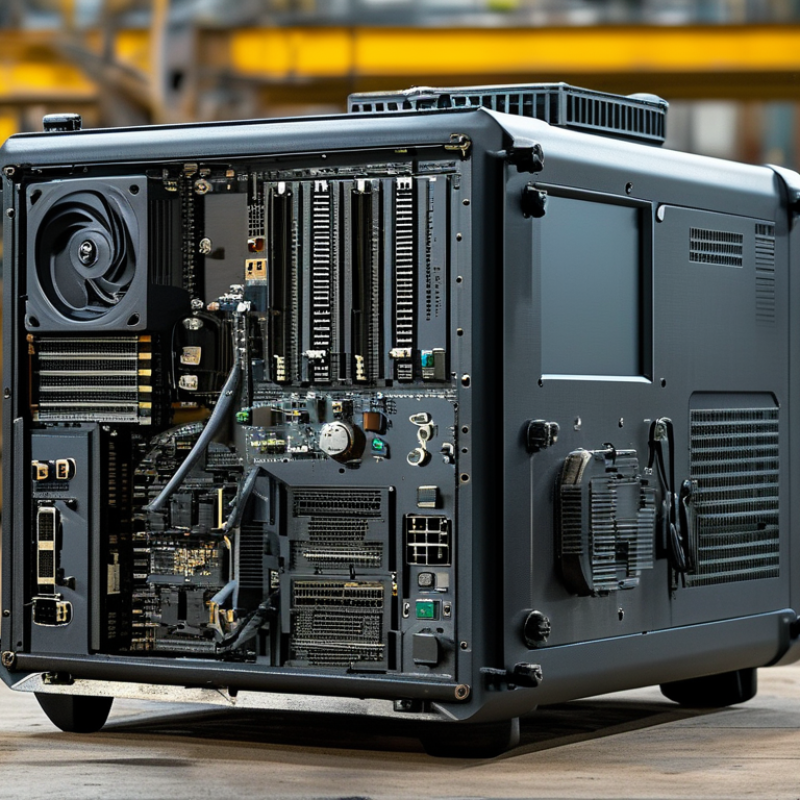
Differences in Design Philosophy Between Industrial and Commercial Computers
Industrial computers and commercial computers differ significantly in design philosophy.
Industrial computers are built for durability and reliability in harsh environments. They can withstand extreme temperatures, vibrations, and dust.
In contrast, commercial computers prioritize cost-effectiveness, focusing on aesthetics and user-friendliness.
According to a report by MarketsandMarkets, the global industrial PC market is expected to grow to USD 5.16 billion by 2023.
This growth is driven by the increasing demand for automation and Industry 4.0 practices.
Manufacturers must ensure that their machines operate continuously, often in challenging conditions. Thus, the design includes sealed enclosures and industrial-grade components.
This results in a higher upfront cost but leads to lower maintenance expenses over time.
Benchmarking data shows that industrial computers typically have a lifespan of over eight years, compared to three to five years for commercial devices.
This longevity is critical for industries relying on continuous operation. However, the complexity of industrial systems can pose challenges.
Integration with legacy systems often requires additional engineering work, leading to potential delays in deployment.
Thus, while the design philosophy offers notable advantages, it also invites reflection on balancing innovation with practicality.
Performance Requirements for Industrial Applications vs. Commercial Use
Industrial computers must meet specific performance requirements for various applications. Unlike commercial computers, they are designed for environments with extreme conditions. For example, industrial computers often operate in temperatures ranging from -40°C to 85°C. According to a report by the International Data Corporation (IDC), approximately 70% of manufacturing firms expect their IT infrastructure to handle more rigorous workloads.
Industrial applications demand higher durability. They frequently face dust, moisture, and vibration. Studies show that these computers undergo more rigorous testing, including MIL-STD-810G standards, ensuring they withstand harsh conditions. In contrast, commercial computers prioritize convenience and user-friendly interfaces, which may not be suitable for these settings.
Tips: When selecting an industrial computer, consider its operating environment. Ensure it meets certification standards for your industry. Evaluating reliability and performance is crucial before making a choice. Remember, investing in quality hardware can reduce long-term costs.
Environmental Tolerance: Ruggedization of Industrial Computers
Industrial computers stand out due to their rugged design, tailored for harsh environments. These computers often face extreme temperatures, humidity, and dust.
Unlike commercial models, they have enhanced enclosures that protect against shocks and vibrations. This robustness makes them suitable for factories and outdoor settings.
Ruggedization is crucial for ensuring operation in demanding conditions.
Industrial computers undergo extensive testing, including thermal cycling and vibration analysis. This process helps identify points of failure. The goal is to create systems that not only survive but thrive in challenging situations.
Their reliability can sometimes be a double-edged sword; they may be over-engineered for less demanding tasks, leading to unnecessary costs.
Despite their sturdy design, some industrial computers still encounter issues. For instance, dust can penetrate seals over time, weakening durability. Regular maintenance is essential yet often overlooked.
Operators need to balance resilience with practicality, allowing for frequent checks and updates to keep systems running smoothly. This ongoing care is a key aspect of industrial computing success.
Longevity and Lifecycle Considerations in Industrial Computing Solutions
Industrial computers are built for rigorous applications that demand durability and longevity. A report from the International Data Corporation highlights that industrial computers can last 7 to 10 years, often longer than their commercial counterparts. This longevity is crucial for industries like manufacturing and transportation, where hardware failures can lead to costly downtimes. In contrast, commercial computers generally have a lifespan of only 3 to 5 years.
Lifecycle considerations play a major role in the selection of industrial computing solutions. Customization often caters to specific operational environments, which can pose unique durability challenges. A survey conducted by VDC Research reveals that over 65% of industry professionals cite lifecycle management as a key decision factor when purchasing industrial computers. The ability to replace parts easily, upgrade systems, and ensure long-term availability of components is vital.
In industrial settings, the concept of planned obsolescence is often viewed with skepticism. The need for maintenance and updates can create a gap in user knowledge. Companies may underestimate the implications of using commercial-grade components in harsh environments. This oversight can lead to operational failures and risks that are hard to justify.
Why Are Industrial Computers Different from Commercial Computers? - Longevity and Lifecycle Considerations in Industrial Computing Solutions
| Feature |
Industrial Computers |
Commercial Computers |
| Durability |
Designed for harsh environments, resistant to dust, vibrations, and temperature fluctuations |
Typically designed for standard office conditions with less emphasis on environmental resistance |
| Longevity |
Longer lifespan, often exceeding 5-10 years without major upgrades |
Shorter lifespan, generally replaced or upgraded every 3-5 years |
| Maintenance |
Designed for easier maintenance and minimal downtime |
May require more frequent servicing and repairs |
| Cost |
Higher initial investment due to specialized components |
Lower initial cost due to mass production |
| Customization |
Highly customizable to fit specific industrial applications |
Limited customization, geared towards general use |
| Support |
Dedicated support for industrial applications |
Standard customer support channels available |
Cost-Benefit Analysis: Upfront vs. Long-Term Investment in Computing Systems
When evaluating industrial computers versus commercial ones, it’s essential to consider long-term investments. Industrial systems may have a higher upfront cost. However, their durability often leads to lower maintenance expenses over time. Businesses must weigh these factors carefully.
A cost-benefit analysis reveals intriguing insights. Industrial computers are designed for harsh environments, providing reliable performance. While they may seem expensive initially, the savings in downtime and repairs can be significant. In contrast, commercial systems might be cheaper, but they often require more frequent replacements. This can lead to unexpected expenses.
Another critical area is energy efficiency. Industrial computers, while initially pricier, consume less power in demanding applications. This can translate into lower energy bills over the years. However, companies must also reflect on their specific needs and usage scenarios. Balancing initial costs with long-term benefits requires careful consideration and understanding of operational environments.
Conclusion
Industrial computers and commercial computers serve distinct purposes, leading to notable differences in their design and performance characteristics. What is the difference between industrial and commercial computers lies primarily in their design philosophy; industrial computers are engineered for rugged environments, while commercial computers prioritize sleek aesthetics and general usability. Performance requirements also diverge, as industrial applications often demand higher reliability and processing capabilities under continuous operation compared to the more varied usage scenarios of commercial devices.
Furthermore, industrial computers are built with enhanced environmental tolerance, ensuring they can withstand extreme temperatures, vibrations, and dust, which is crucial for factory and outdoor settings. Their longevity and lifecycle considerations reflect a focus on durability and maintenance, making them a smart long-term investment despite higher upfront costs. Understanding these distinctions is essential for businesses deciding between the two types of computing solutions, as the cost-benefit analysis will guide them toward the option that best suits their specific operational needs.

 Fray Tech