What Is Industrial IoT and How It Improves Efficiency?

Time:2026-09-30 Author:Henry
0%

On a factory floor, a failed bearing may begin with a faint vibration, long before a machine stops. Industrial Internet of Things (IIoT) devices can detect that change through sensors connected to equipment and monitoring systems. They collect information such as temperature, pressure, vibration, and energy use. That information helps teams spot developing problems, schedule maintenance, and reduce avoidable downtime.

The practical question is how to improve efficiency with industrial iot devices without adding complexity. A useful deployment starts with a clear operational problem, such as repeated compressor faults or excessive energy use on a production line. Sensors can then provide timely data, while dashboards help operators see patterns and act sooner. The results depend on reliable measurements, secure connections, and staff who understand what the alerts mean. More data alone is not a solution.

The wider shift has been captured by former GE CEO Jeff Immelt: “If you went to bed last night as an industrial company, you're going to wake up this morning as a software and analytics company.” His observation reflects how connected equipment can make operational data central to industrial decisions. Still, an IIoT project may disappoint when devices are poorly placed or alerts are ignored. Small pilot projects offer a grounded way to test benefits before expanding across a site. This article explains the technology, its efficiency gains, and the practical choices behind successful implementation.
What Is Industrial IoT and How It Improves Efficiency?

Industrial IoT Defined: How Connected Machines Turn Operations into Data

Industrial IoT (IIoT) connects machines, sensors, control systems, and software so physical operations produce usable data. A vibration sensor on a pump, for example, can record changes that may signal wear before a breakdown. Data becomes more valuable when it includes context: machine settings, shift times, maintenance records, and production targets. IoT Analytics estimated 16.6 billion connected IoT devices worldwide at the end of 2023. That figure covers many sectors, not factories alone, but it shows how quickly connected infrastructure is growing.

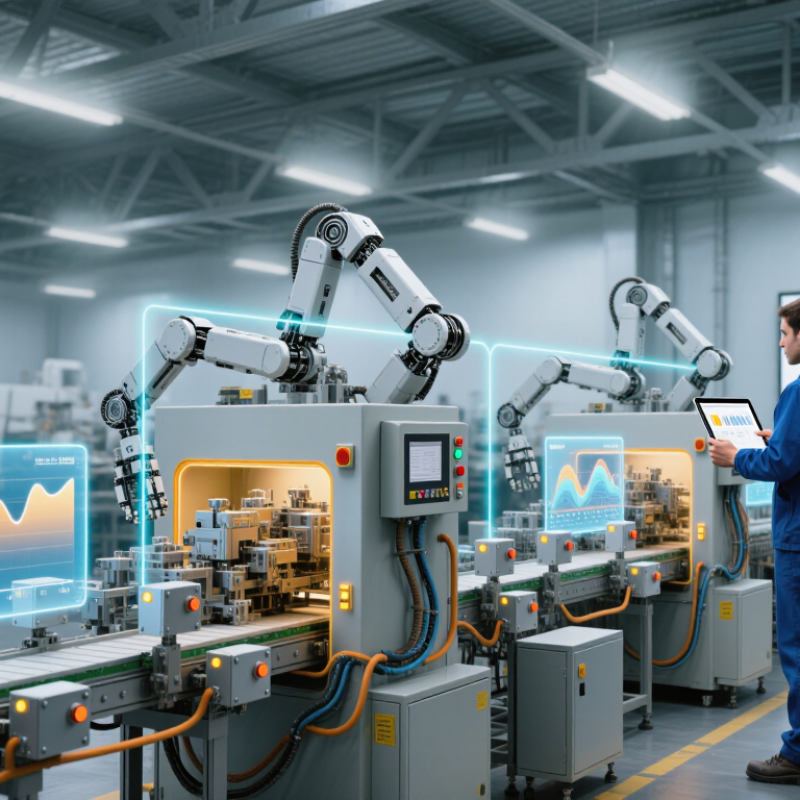
In a plant, readings can flow from equipment to an edge computer, where basic checks happen close to the machine. Selected data then reaches operational dashboards or analytics tools. Teams can compare energy use across shifts, spot temperature changes, and schedule inspections using condition trends. The World Economic Forum’s Global Lighthouse Network reports improvements in productivity and sustainability at recognized advanced manufacturing sites. These results show potential, not a guarantee for every facility. A dashboard is not a better decision by itself. Early alerts can be noisy, and poor sensor placement may hide the very fault teams need to see.

Tips: Start with one costly, measurable problem, such as repeated pump stoppages. Check sensor accuracy against manual readings, assign someone to review alerts, and define what action follows each warning. Keep a record of false alarms. It is easy to collect data; making it dependable takes work.

IIoT Architecture: Sensors, Edge Computing, Networks, and Analytics

Industrial IoT begins with sensors attached to real equipment. They measure vibration, temperature, pressure, or power draw.

A rising bearing temperature can trigger an inspection before a production line stops. Small signals matter. But sensors need calibration; noisy readings can create false alarms.

Edge computers process urgent data beside the machine, reducing delays and filtering unnecessary traffic. Networks then carry selected readings to plant systems or cloud platforms.

Wired connections suit fixed machinery, while wireless links can help monitor rotating or hard-to-reach assets. Security and reliable connectivity must be designed into each layer. A disconnected sensor is still just a sensor.

Analytics turns readings into maintenance decisions. McKinsey’s 2015 report, The Internet of Things: Mapping the Value Beyond the Hype, estimated that IoT-enabled predictive maintenance could cut maintenance costs by 10–40% and unplanned downtime by up to 50%.

These are modeled opportunities, not guaranteed results. Deloitte and MAPI’s 2019 smart-factory survey found that 86% of manufacturers expected smart factories to be a major competitiveness driver within five years. Results still depend on usable data and staff who understand the equipment. Edge rules also need revisiting as machines age.

Predictive Maintenance: McKinsey Estimates 10–40% Lower Maintenance Costs

Industrial IoT connects machines, sensors, and maintenance teams through shared operating data. A vibration sensor on a pump can flag a rising bearing temperature before the unit starts rattling or loses pressure. Small signals matter. Teams can then inspect the specific component instead of replacing parts on a fixed schedule.

McKinsey’s 2015 report, The Internet of Things: Mapping the Value Beyond the Hype, estimates predictive maintenance can lower maintenance costs by 10–40%. The U.S. Department of Energy’s Operations & Maintenance Best Practices Guide reports savings of 8–12% compared with preventive maintenance, and up to 30–40% compared with reactive maintenance. The difference depends on the equipment, data quality, and how well teams act on alerts. These are industry estimates, not guaranteed results.

In practice, a plant needs reliable sensor readings and a clear baseline for normal operation. A sudden change in motor vibration may warrant a check, but it does not prove a failure is imminent. A sensor can also be wrong. Maintenance staff should verify alerts against inspection records and operating conditions before scheduling work. That step takes time, and poorly tuned alarms can create extra work rather than savings.

Less Unplanned Downtime: McKinsey Estimates Reductions of Up to 50%

Industrial IoT uses connected sensors to track equipment while it runs. On a factory floor, sensors can measure motor vibration, bearing temperature, and pressure changes. Software compares those readings with normal operating patterns and flags unusual shifts. A maintenance team may then inspect a warm bearing before it fails during a busy production run.

A prominent industry estimate suggests predictive maintenance can reduce unplanned downtime by up to 50%. That figure describes potential, not a guaranteed outcome. Results depend on sensor quality, useful data, and whether workers can respond quickly.

Not every alert helps. A poorly tuned system can send too many warnings, and a missed reading can still leave a machine exposed. Teams should compare stoppage hours, repair time, and false alarms before and after installation.

Even a simple record of recurring faults can reveal where monitoring earns its cost. The technology is useful, but it does not replace experienced technicians—or careful judgment.

Economic Potential: McKinsey Projects $5.5T–$12.6T in IoT Value by 2030

Industrial IoT connects machines, sensors, and software so factories can spot problems earlier and use resources more carefully. McKinsey projects that IoT could create $5.5 trillion to $12.6 trillion in economic value annually by 2030. This is a broad estimate, not a guaranteed industry payout. Its range reflects uncertainty around adoption, implementation costs, and how businesses measure value.

On a factory floor, a vibration sensor might flag a bearing that is wearing down. A technician can inspect it before an unexpected shutdown disrupts a shift. Connected meters can also reveal when equipment uses excess power while idle. These improvements can save time and materials, though results depend on reliable data and workers who can act on it. Sensors alone do not fix a process.

Tips: Start with one costly bottleneck, such as unplanned downtime. Track baseline repair time, energy use, and output before adding sensors. Check whether readings match what technicians see on the floor. Even good data can mislead when sensors are poorly placed—a detail teams may overlook. Compare results after a few months, then decide whether to expand.

FAQS

What does Industrial IoT mean?

It connects machines, sensors, control systems, and software. Equipment readings become data teams can use.

How does machine data reach factory teams?

Sensors send readings to an edge computer near the equipment. Selected data then appears in dashboards or analytics tools.

How can connected sensors support predictive maintenance?

A pump’s vibration sensor may detect changes or rising bearing temperature. Staff can inspect that component before a breakdown. Small signals matter.

How much could predictive maintenance reduce costs?

Published industry estimates suggest maintenance costs may fall by 10–40%. Actual results depend on equipment, data quality, and staff response.

Can sensor alerts prove that a machine is failing?

No. A vibration change may justify an inspection, but it does not confirm failure. Check the alert against operating conditions and maintenance records.

What problems can unreliable sensor data cause?

Poor placement can hide a fault, while inaccurate readings can trigger extra work. And honestly, a dashboard can still be wrong.

What is a practical way to begin using Industrial IoT?

Choose one measurable problem, such as repeated pump stoppages. Record repair time, energy use, or output before installing sensors.

Does adding sensors automatically improve factory performance?

No. Teams need dependable readings and clear actions for each alert. Keep track of false alarms, too. It takes work.

Conclusion

Industrial IoT, or IIoT, connects machines, sensors, and operational systems so that equipment can generate useful data in real time. A typical architecture combines sensors that collect information, edge computing that processes data close to the machines, reliable networks that transmit it, and analytics that help teams recognize patterns and make informed decisions. Together, these elements turn day-to-day operations into a clearer, data-driven view of performance.

One practical answer to how to improve efficiency with industrial iot devices is to use equipment data to anticipate maintenance needs instead of relying only on fixed schedules or reacting after a breakdown. Industry estimates suggest predictive maintenance can lower maintenance costs by 10–40%, while connected monitoring may reduce unplanned downtime by up to 50%. At a broader level, projections place the potential economic value of IoT at $5.5 trillion to $12.6 trillion by 2030. These benefits depend on applying insights effectively, but IIoT can help organizations improve reliability, use resources more efficiently, and make operations more responsive.

Henry

Henry

Henry is a dedicated marketing professional with a profound expertise in the company's offerings. With years of experience in the industry, he possesses an impressive understanding of the market dynamics and consumer behaviors that drive success. Henry is committed to sharing his insights through......