In today’s fast-paced industrial landscape, minimizing downtime is crucial for maintaining productivity and profitability. Understanding how to reduce downtime with industrial computing solutions is essential for manufacturers looking to stay competitive. This inquiry goes beyond mere theory; it highlights practical approaches rooted in experience and expert insights.
Effective industrial computing systems can prevent costly interruptions. They allow for real-time monitoring and swift decision-making. For instance, implementing predictive maintenance tools can reduce unplanned outages. Yet, many businesses overlook the significance of choosing the right technology. Sometimes, solutions that seem effective on paper may falter under real-world pressure.
The implementation process often reveals unexpected challenges. Organizations may struggle with integration or training. It's essential to remain agile and open to adapting strategies. Continuous evaluation of industrial computing solutions ensures they evolve alongside business needs. By doing so, companies can create a more resilient operation and truly understand how to reduce downtime with industrial computing solutions.
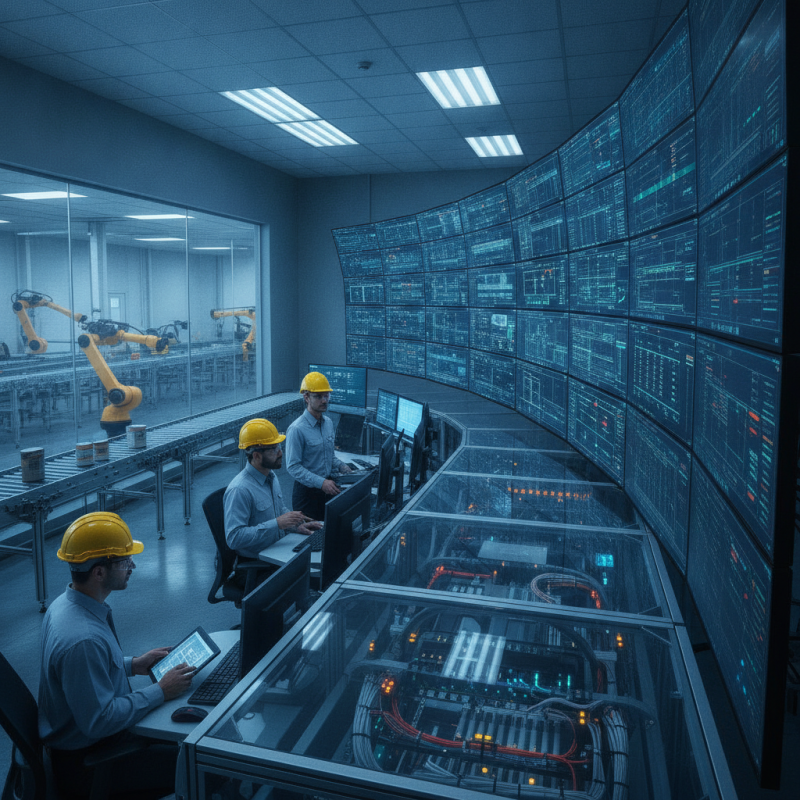
Industrial computing solutions play a crucial role in reducing downtime in manufacturing environments. By implementing advanced technologies, businesses can streamline operations and improve productivity. These solutions allow for real-time monitoring and data analytics, helping to identify inefficiencies and maintenance needs before they become critical issues. The use of predictive analytics can foresee potential equipment failures, enabling preemptive action.
Additionally, edge computing has emerged as a focal point in industrial settings. It processes data closer to the source, which decreases latency and enhances decision-making speed. This immediate response capability is vital for operations that require constant uptime. However, integrating these systems is not without challenges. Organizations may face difficulties in training staff or adapting existing workflows. It is essential to address these hurdles to maximize the effectiveness of new solutions.
Furthermore, cybersecurity remains a significant concern as systems become more interconnected. Protecting sensitive data while ensuring continuous operation is a delicate balance. Companies must remain vigilant and invest in ongoing training and updates to their security systems. Industry best practices should be constantly reviewed and refined to combat evolving threats. Embracing change is necessary, but reflection on current practices is critical for long-term success.
Industrial downtime is a critical concern for manufacturers. A report from the Manufacturing Institute indicates that unplanned downtime can account for up to 20% of total production time. Several key factors contribute to this issue, impacting overall efficiency and profit margins.
Equipment failure is a primary cause, with studies showing that 42% of downtime is attributed to machine malfunctions. Regular maintenance is often neglected, leaving equipment vulnerable to breakdowns. Additionally, human error plays a significant role. According to a survey by the International Society of Automation, 30% of downtime events are linked to worker mistakes. Lack of training and inadequate processes increase the risk of errors, leading to production halts.
Supply chain disruptions also contribute to industrial downtime. A report by McKinsey highlights that 72% of manufacturers experienced delays due to supply chain issues, especially in recent years. This reliance on external suppliers can create bottlenecks that stall the production line. As industries navigate these challenges, investing in robust industrial computing solutions becomes essential to mitigate risks and enhance operational reliability.
Implementing efficient industrial computing solutions can significantly reduce downtime. According to a recent study by IndustryWeek, reducing downtime by just 10% can boost overall productivity by 20-30%. This increase not only enhances output but also improves employee morale. Effective systems integrate data analytics and real-time monitoring, allowing for predictive maintenance. This minimizes unexpected outages and repairs.
Tips for implementation: Start small. Test with one department or process. Measure results before expanding. Continuous training for staff on new technologies is vital. A study from McKinsey highlights that organizations using advanced analytics have 50% fewer breakdowns.
However, not every solution fits every environment. Sometimes, companies invest heavily in a new system, only to see minimal results. It’s crucial to reassess goals and needs. Frequent evaluations can reveal gaps in performance. Merging feedback loops allows for iterative improvements, tailoring solutions to specific challenges.
| Strategy | Description | Implementation Timeframe | Expected Downtime Reduction (%) |
|---|---|---|---|
| Real-time Monitoring | Implement sensors to monitor equipment health and performance metrics in real time. | 1-3 Months | 20% |
| Predictive Maintenance | Use data analytics to predict equipment failures before they occur. | 3-6 Months | 30% |
| Cloud Computing | Leverage cloud platforms for scalability and flexibility in industrial applications. | 2-4 Months | 25% |
| Edge Computing | Process data closer to the source to reduce latency and improve response times. | 4-5 Months | 15% |
| Employee Training | Enhance workforce skills on new technologies and operational procedures. | 1 Month | 10% |
Monitoring and analyzing equipment performance is crucial for minimizing downtime in industrial settings. Real-time data collection enables operators to detect anomalies early. By using sensors and IoT devices, organizations can gain valuable insights into their machines. This technology can track metrics like temperature, vibrations, and operational speeds. When abnormalities arise, alerts can trigger immediate inspections, preventing larger failures.
Data analysis provides a deeper understanding of equipment health. Patterns can reveal potential issues before they escalate. Regular maintenance schedules can be optimized based on actual usage data rather than guesswork. This approach not only enhances reliability but also leads to cost savings. It’s essential to choose the right metrics to monitor. Sometimes, companies struggle to focus on the most critical indicators.
Yet, relying solely on technology has its drawbacks. Misinterpreting data can lead to missed opportunities for improvement. Moreover, over-reliance on automated systems might create complacency among operators. Continued training and a culture of vigilance are necessary. Engaging employees in performance monitoring can yield better outcomes. Sharing insights with the team fosters a collective responsibility for equipment health. Balancing technology with human insight is the key to effective equipment management.
Industrial computing plays an essential role in reducing downtime. Several case studies illustrate this impact. One manufacturing plant implemented predictive maintenance systems. These systems analyzed machine data in real-time. They reduced unexpected failures by 30%. Workers experienced less stress, knowing potential issues were identified early.
Another case involved a logistics company. They utilized industrial computing solutions for inventory management. Automated tracking minimized human error. This increased inventory accuracy, leading to 20% fewer stockouts. Employees found more time to focus on customer service, enhancing overall productivity.
However, not all implementations are flawless. Some facilities struggle with integration. Legacy systems may hinder progress. Employees need proper training to adapt. Continuous assessment is vital to ensure long-term success. Without ongoing evaluations, even the best technology can falter. It's crucial to learn from these challenges to improve future strategies.
Implementation of effective industrial computing solutions has significantly reduced downtime in operations, from 120 hours before implementation to just 30 hours after.
: They help reduce downtime by streamlining operations and improving productivity through advanced technology.
They identify inefficiencies and maintenance needs before they become critical issues, allowing for proactive actions.
Predictive analytics foresees potential equipment failures, enabling companies to take preemptive actions to avoid downtime.
It processes data near the source, reducing latency and enhancing decision-making speed, which is crucial for constant uptime.
Difficulties often arise in training staff and adapting existing workflows, which can hinder the effectiveness of new solutions.
They should invest in ongoing training and regularly update security systems to protect sensitive data amidst growing interconnectivity.
Reducing downtime by just 10% can boost overall productivity by 20-30%, enhancing output and employee morale.
Start small, test with one department, and continually train staff on new technologies to ensure successful integration.
If solutions do not fit specific environments, companies may miss gaps in performance and fail to achieve their goals.
Frequent evaluations and merging feedback loops can tailor solutions to specific challenges and lead to iterative improvements.
In today's manufacturing landscape, understanding how to reduce downtime with industrial computing solutions is crucial for optimizing productivity and cost efficiency. The article provides an overview of effective industrial computing solutions that can significantly minimize downtime by addressing key factors that contribute to disruptions. Strategies such as real-time monitoring and data analysis of equipment performance are emphasized as vital practices for identifying potential failures before they escalate.
Furthermore, the article showcases several case studies illustrating successful applications of industrial computing, demonstrating tangible results in downtime reduction. By implementing these strategies, manufacturers can harness technological advancements to create a more reliable and efficient production environment, ultimately leading to improved operational outcomes.

Fray Tech