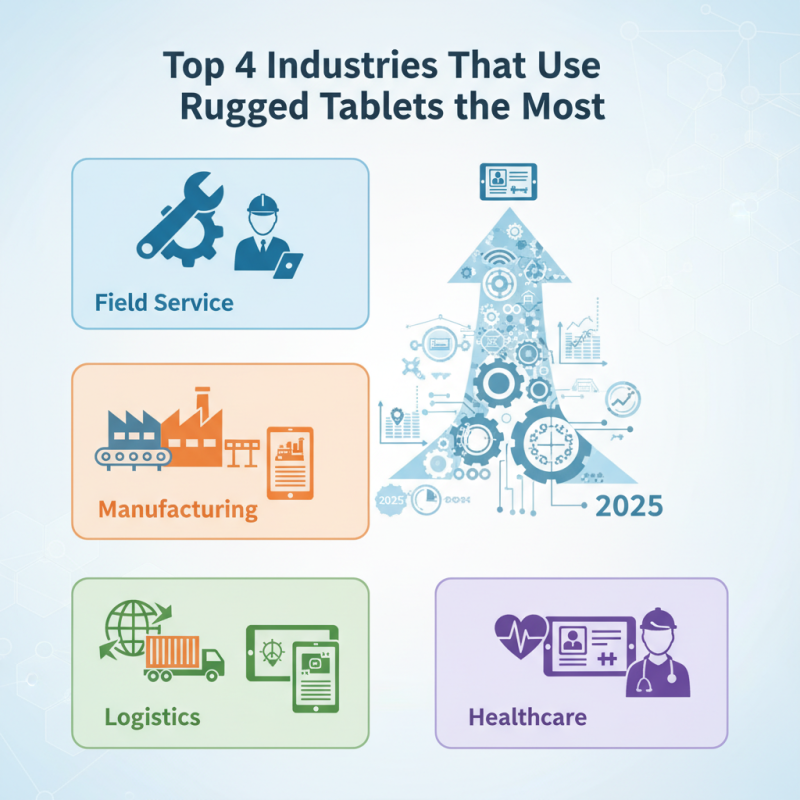
As businesses continue to evolve, the demand for rugged tablets has surged. These devices are built to withstand harsh environments, making them ideal for specific sectors. But what industries use rugged tablets the most? Reports indicate that the field service, manufacturing, logistics, and healthcare industries are the primary users. For instance, a study by VDC Research noted that the rugged mobile device market is projected to grow significantly, surpassing $4 billion by 2025.
Field service technicians rely on rugged tablets to conduct inspections and manage tasks efficiently. In the manufacturing sector, these devices help monitor equipment and streamline production lines. Logistics companies use rugged tablets to track shipments, facilitating real-time updates. The healthcare industry benefits from these tablets, allowing for secure patient data access in various environments, including emergency situations.
While these industries showcase the versatility of rugged tablets, challenges remain. Not all rugged devices meet the specific needs of every sector. Additionally, the initial investment for rugged tablets can be a barrier for smaller businesses. Nonetheless, these tablets continue to gain traction due to their reliability and efficiency. Understanding which industries leverage these devices is crucial for businesses considering an investment in rugged technology.
Top Industries Relying on Rugged Tablets for Enhanced Performance
Rugged tablets are increasingly vital in several industries. In construction, for instance, these devices enhance productivity. A study by the International Data Corporation (IDC) indicates that using rugged tablets can improve data entry speed by up to 50%. Field workers rely on them to access blueprints and specifications in real time, reducing costly errors.
The manufacturing sector also benefits significantly from rugged tablets. Research shows that these devices support lean manufacturing efforts by increasing worker efficiency. Workers equipped with rugged tablets can track inventory and manage workflows better. Reports highlight that operations can see a 20% increase in productivity when teams use reliable, durable technology on the shop floor.
Healthcare is another industry embracing rugged tablets. A report from Gartner reveals that hospitals using these devices have improved patient data management efficiency by 30%. Medical staff can quickly document care and access patient records on-the-go. However, the integration of rugged tablets into daily operations is not without challenges. Training staff remains crucial for maximizing their effectiveness in such environments.
Key Characteristics of Rugged Tablets Facilitating Industry Use
Rugged tablets are designed for challenging environments. Their durability and reliability make them essential in various industries. These tablets often feature reinforced casings, waterproof designs, and shatter-resistant screens. Such characteristics help them thrive in construction sites, warehouses, and outdoor settings.
Manufacturing and logistics sectors benefit greatly from rugged tablets. Workers use them to scan inventory, track shipments, and manage operations on the go. The touch screens are responsive, even with gloves on, making them practical for hands-on professionals. Another advantage is their long battery life, which ensures continuous operation through long shifts.
Tips: When choosing a rugged tablet, consider the operating environment. Look for higher IP ratings for dust and water resistance. Also, assess compatibility with existing software systems. A tablet that seamlessly integrates can enhance productivity significantly. Remember, investing in additional accessories could also extend functionality and improve user experience in the field.
Case Studies: Successful Implementation in Various Sectors
Rugged tablets have proven valuable across various sectors, optimizing operations and enhancing productivity. In the field of healthcare, clinicians use these devices to access patient records on the go. A hospital in Midwest USA improved patient care by equipping nurses with rugged tablets. The immediate access to data helped reduce errors and increased efficiency. However, initial training for staff was crucial. Some team members struggled with the technology, highlighting the need for ongoing support.
Construction companies also benefit from using rugged tablets on job sites. These devices withstand harsh conditions, allowing project managers to track progress in real time. A project in a coastal area faced issues with connectivity, impacting communication. Despite this, the team adapted their workflow. They learned to sync data when back in range, showcasing resilience in overcoming technological limitations. This adaptability proved essential for project success.
Emergency services have integrated rugged tablets into their operations as well. Firefighters rely on these devices for quick access to building layouts and emergency protocols. One city implemented rugged tablets for all units responding to fires. This move resulted in quicker decision-making. Yet, challenges remain. Some firefighters found it difficult to retrieve information amid high-pressure situations, indicating a need for further refinement in usability.
Top 10 Industries That Use Rugged Tablets the Most
Emerging Trends in Rugged Tablet Adoption Across Industries
Rugged tablets are gaining traction across various industries. This trend reflects a shift towards mobile technology in fields requiring durability. According to a recent study, the rugged tablet market is projected to grow at a compound annual growth rate of 6.9% from 2021 to 2026.
In sectors like construction and manufacturing, rugged devices are essential. These tablets can withstand harsh environments. Workers in these industries rely on them for data collection and communication. The latest reports indicate that nearly 55% of workers in field services prefer rugged tablets for their reliability. Trends show that adoption is also increasing in healthcare. Medical staff use them for real-time patient data access.
However, some challenges remain. Training is needed for effective use of these devices. Companies sometimes overlook this aspect. Security concerns regarding data transfer and device management persist. Addressing these issues is crucial for increasing user confidence. As rugged tablets continue to gain popularity, industries must adapt to fully reap their benefits.
Future Outlook: The Evolving Role of Rugged Tablets in Business
The evolving role of rugged tablets in business is significant as industries embrace digital transformation. These devices are designed to withstand extreme conditions. They offer durability and functionality in challenging environments, making them indispensable for sectors such as construction, logistics, and manufacturing.
In the workplace, rugged tablets facilitate real-time data access. Workers can access information easily, enhancing productivity on-site. However, not all businesses maximize their potential. Some companies struggle with integration into existing systems. This presents a barrier to fully reaping the benefits of rugged technology.
As remote work becomes more common, rugged tablets are adapting to new demands. Features such as advanced connectivity and long battery life support remote operations. Yet, challenges remain. Businesses must invest in training and tech support for optimal usage. Addressing these gaps is crucial for leveraging the full power of rugged tablets in modern operations.
Top 10 Industries That Use Rugged Tablets the Most
| Industry |
Primary Use Case |
Growth Rate (2023) |
Future Outlook |
| Manufacturing |
On-site data collection and monitoring |
8% |
Increasing reliance on IoT and automation |
| Logistics |
Real-time tracking and inventory management |
10% |
Growing demand for streamlined operations |
| Construction |
Site management and field reporting |
6% |
Increased integration with project management tools |
| Healthcare |
Patient data access and management |
12% |
Focus on telehealth and mobile health solutions |
| Military and Defense |
Tactical communication and field operations |
15% |
Increased use of advanced technology in the field |
| Transportation |
Route optimization and driver management |
9% |
Shift towards smart transportation initiatives |
| Field Services |
Service calls and maintenance tracking |
11% |
Enhanced mobile workforce solutions |
| Retail |
Point of Sale and inventory checks |
7% |
Growing trend towards mobile payment solutions |
| Telecommunications |
Network management and maintenance |
8% |
Focus on 5G deployment and management |
| Energy and Utilities |
Field data collection and reporting |
9% |
Emphasis on smart grid technologies |
Conclusion
Rugged tablets have become essential tools across various sectors due to their durability and specialized features. Key industries that use rugged tablets the most include logistics, healthcare, manufacturing, field service, and public safety. These tablets are designed to withstand harsh conditions, which is vital for professionals working in environments such as warehouses or outdoor settings. The robust design, long battery life, and enhanced connectivity make rugged tablets an optimal choice for demanding applications.
Recent case studies reveal successful implementations across these industries, showcasing improved efficiency and performance. Emerging trends indicate a growing adoption of rugged tablets, driven by advances in technology and an increasing need for mobile solutions. The future outlook for rugged tablets in business suggests they will continue to evolve, further integrating into workflows and enhancing operational capabilities across diverse sectors.

 Fray Tech